


Views: 0 Author: Site Editor Publish Time: 2026-08-17 Origin: Site


Marine propulsion systems operate in brutal open-ocean environments. Extreme hydrodynamic, chemical, and mechanical stresses constantly attack submerged components. Material failure leads to catastrophic downtime. In high-profile military applications, such as Nimitz-class aircraft carriers and modern submarines, material selection directly impacts national security. Fleet operators, marine engineers, and naval architects face a strict balancing act. They need a highly corrosion resistant propeller that delivers the mechanical strength required to withstand immense torque and impact forces. Achieving this without adding excessive weight to the drivetrain or increasing acoustic signatures is a massive engineering challenge. Nickel Aluminum Bronze (NAB) stands as the prevailing engineering solution. Specifying a Ni-Al Bronze Marine Propeller resolves the tension between durability, efficiency, and lifecycle maintenance requirements compared to legacy materials.
Superior Cavitation Resistance: The addition of nickel and aluminum creates a tough, protective oxide layer that significantly mitigates cavitation erosion and pitting.
High Strength-to-Weight Ratio: NAB's high yield strength allows for thinner blade profiles, reducing overall weight, lowering rotational inertia, and requiring less engine torque for optimal propulsion.
Exceptional Impact Tolerance: Unlike brittle alternatives, NAB maintains high notch toughness, allowing it to absorb debris impacts without catastrophic fracturing or crack propagation.
Lifecycle Cost Efficiency: While initial casting costs may be higher than standard brass or cast iron, the extended lifespan, lower fuel consumption, and repairability of a nickel aluminum bronze propeller yield lower lifecycle expenses.
Any propulsion material operating in harsh marine environments must meet strict baseline engineering requirements. Commercial and military vessels require materials that can survive continuous operation under heavy loads while resisting rapid degradation. Establishing these performance benchmarks is critical for evaluating long-term reliability. We evaluate these materials based on their ability to handle specific, unavoidable physical and chemical threats in seawater.
Cavitation occurs when extreme pressure differentials during high-speed rotation cause vapor bubbles to form and rapidly implode on the blade surface. As the propeller blade pushes through the water, the pressure on the forward-facing side drops. If this pressure falls below the vapor pressure of water, the water locally boils, creating bubbles. When these bubbles move into higher-pressure zones toward the trailing edge, they collapse violently. These continuous implosions generate intense shockwaves. The localized forces easily strip away standard protective coatings and erode base metals through violent micro-jet impacts.
Cavitation resistance serves as a primary metric for evaluating propeller longevity and hydrodynamic efficiency. Materials that cannot withstand these forces suffer rapid pitting. This pitting alters the blade geometry, which reduces thrust and increases drag. Eventually, the uneven surface leads to severe vibration and structural failure. Engineers must select a material hard enough to resist these micro-jet impacts but tough enough not to shatter under the continuous high-frequency shockwaves.
Operating dissimilar metals in a highly conductive saltwater electrolyte creates immediate electrochemical risks. Galvanic corrosion accelerates the degradation of the less noble metal in the system. A bronze propeller connected to a steel shaft and a cast iron engine block forms a massive battery in seawater. Without proper material selection and cathodic protection, the less noble components dissolve rapidly.
Furthermore, crevice corrosion poses a specific threat at the propeller hub, keyways, and shaft interface. In these tight spaces, oxygen levels deplete rapidly. This localized oxygen starvation breaks down passive protective films, allowing aggressive chloride ions to attack the metal. To combat this, marine engineers follow strict inspection protocols during drydocking:
Remove the propeller nut and locking mechanisms.
Extract the propeller from the tapered shaft using hydraulic pullers.
Clean the shaft taper and propeller bore with non-metallic abrasives.
Perform a visual inspection of the keyway corners for pitting or dark oxide trails.
Conduct liquid penetrant testing on the hub interface to detect micro-cracks originating from corrosion pits.
Submerged debris strikes are inevitable. Logs, ice, shipping containers, and marine debris constantly threaten propulsion systems. A material's notch sensitivity dictates its survivability. Notch sensitivity refers to how easily a crack propagates from a localized impact point or scratch. A reliable marine propeller material must resist this crack propagation.
High notch toughness ensures that a localized dent does not turn into catastrophic blade loss at sea. When a brittle material strikes a submerged log, the blade snaps off, leaving the vessel stranded and causing massive imbalance in the drivetrain. When a tough material like NAB strikes the same log, the blade may bend or dent, but it remains attached. The vessel can limp back to port for repairs. This survivability factor is non-negotiable for vessels operating in remote or ice-prone waters.
Military naval vessels, including submarines and surface combatants, operate under strict acoustic stealth requirements. Structural vibration and blade-rate noise can easily reveal a vessel's position to passive sonar systems. High material dampening capacity reduces these vibrations. The internal metallurgical structure of the alloy absorbs acoustic energy before it radiates into the surrounding water.
Additionally, specialized naval applications require non-magnetic properties. Minesweepers and submarines must evade magnetic detection and magnetic-influence sea mines. These vessels demand materials that do not retain or generate magnetic signatures. Standard steels and even some grades of stainless steel fail this requirement, making specialized bronze alloys the only viable option for stealth propulsion.
The specific chemical composition and phase transitions of NAB give it unique properties. These metallurgical characteristics make it a premier cast alloy for marine propulsion applications. Understanding the interaction of these elements explains why the material performs so well under stress.
The standard alloy composition of ASTM B148 / UNS C95800 is tightly controlled to ensure consistent mechanical properties across massive castings. Even slight deviations in the chemistry can lead to brittle phases or reduced corrosion resistance.
Element | Percentage Range | Primary Metallurgical Function |
|---|---|---|
Copper (Cu) | 78.0% - 82.0% | Base matrix, provides natural biofouling resistance and ductility. |
Aluminum (Al) | 8.5% - 11.0% | Solid-solution strengthening, forms protective alumina oxide film. |
Nickel (Ni) | 3.0% - 6.0% | Refines grain structure, stabilizes kappa phases, improves corrosion resistance. |
Iron (Fe) | 3.0% - 6.0% | Increases tensile strength, acts as a grain refiner during solidification. |
Manganese (Mn) | 1.5% Max | Deoxidizer during melting, slightly improves strength and hardness. |
Aluminum provides solid-solution strengthening. It also forms a self-healing aluminum oxide (alumina) film when exposed to oxygen and water. This film serves as the primary defense against corrosion. If the blade is scratched by debris, the aluminum at the surface immediately reacts with oxygen in the water to reform the protective barrier.
Nickel plays an equally vital role. It refines the grain structure and suppresses the formation of the unstable, corrosion-susceptible beta phase. During the cooling process of a large casting, nickel stabilizes the tough kappa phases. These microscopic intermetallic particles distribute evenly throughout the copper matrix, acting like rebar in concrete to stop crack propagation and increase overall hardness.
Cast nickel aluminum bronze exhibits a significantly higher yield strength compared to standard manganese bronze and cast steels. Yield strength measures the stress required to cause permanent deformation. Tensile strength measures the absolute breaking point. For marine applications, yield strength is the far more critical metric.
High yield strength ensures the blades maintain their design-specified pitch under heavy hydrodynamic loads. When a ship accelerates rapidly, the water resistance pushes back against the blades with immense force. If a material yields too easily, the blades warp. This warping destroys propulsion efficiency, causes severe drivetrain vibration, and permanently alters the hydrodynamic profile of the propeller.
The superior mechanical properties of NAB allow naval architects to design thinner, more hydrodynamically efficient blades. They achieve this without sacrificing structural safety factors. This creates cascading engineering benefits throughout the entire vessel.
Thinner blades mean lower rotational mass. Reduced mass leads to less bearing wear on the shaft and less strain on the reduction gears. Ultimately, the vessel experiences decreased engine torque requirements during acceleration and reversing maneuvers. The engine does not have to work as hard to spin a lighter, thinner propeller up to operating RPM, which directly translates to less mechanical fatigue on the drivetrain components.
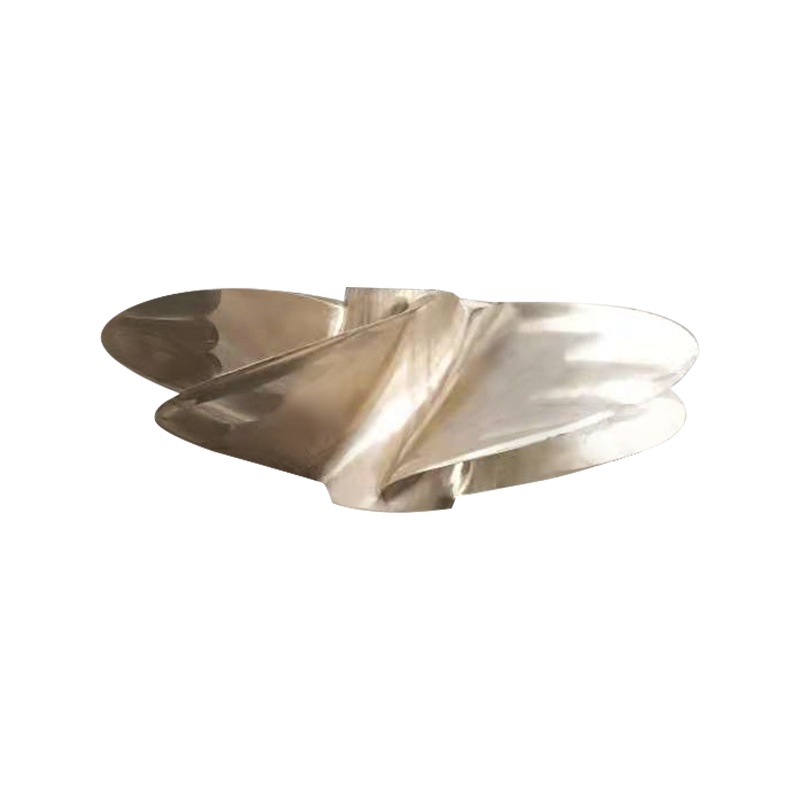
Providing a direct, objective comparison of NAB against other common marine alloys facilitates accurate technical decision-making for fleet upgrades and new builds. Engineers must weigh the initial material costs against long-term performance and maintenance requirements.
Manganese bronze served as a historical, lower-cost standard for light commercial and recreational vessels. It is easy to cast and easy to machine. However, the trade-offs in harsh environments are severe.
Manganese bronze suffers from aggressive dezincification. This is the selective leaching of zinc in seawater. The saltwater acts as an electrolyte, pulling the zinc atoms out of the alloy matrix and leaving a weak, porous copper structure behind. A dezincified propeller looks normal on the surface but will shatter under moderate impact. Furthermore, manganese bronze has significantly lower resistance to cavitation, fatigue, and impact compared to NAB. It is entirely unsuitable for heavy commercial or naval use.
Stainless steel often appears on smaller high-speed vessels, icebreakers, or specific high-load applications where absolute tensile strength is required. Yet, stainless steel presents major drawbacks in large-scale commercial and naval applications.
Stainless steel carries higher weight, which increases rotational inertia and drivetrain strain. More critically, it suffers from susceptibility to severe crevice corrosion in stagnant or low-oxygen seawater. Stainless steel relies on a chromium oxide layer for protection, which requires constant oxygen exposure to maintain itself. Under a barnacle or inside a hub keyway, oxygen is depleted, and the stainless steel corrodes rapidly. Additionally, performing field repairs or welding on stainless steel is vastly more difficult compared to a bronze ship propeller. Stainless requires strict purging and heat control to prevent carbide precipitation during welding.
Carbon fiber and hybrid composite propellers frequently generate industry buzz. They promise extreme weight reduction and zero corrosion. Despite the hype, significant limitations remain for heavy marine use.
Current manufacturing costs are prohibitive for large commercial vessels. Composites suffer from anisotropic failure modes, meaning their strength varies by direction based on the fiber layup. If a composite blade takes an impact from an unexpected angle, it can delaminate internally. Most critically, repairing composite blades after impact damage is nearly impossible in a standard drydock. You cannot weld or easily patch a shattered carbon fiber blade. These realities reinforce NAB as the reliable, repairable industry standard.
Translating metallurgical properties into operational and financial outcomes helps fleet managers and vessel owners make informed engineering choices. The initial casting cost of a propeller is only a fraction of its true financial impact over a 20-year vessel lifespan.
The high strength of a nickel aluminum bronze propeller allows for optimized, thin-foil blade geometries. Thinner blades slice through the water with less resistance. They displace less water unnecessarily and create a cleaner wake.
This direct correlation between reduced drag and minimized cavitation inception translates to substantial long-term fuel savings over thousands of operating hours. Even a 1% increase in hydrodynamic efficiency can save a large cargo vessel hundreds of thousands of gallons of heavy fuel oil over a decade. The ability of NAB to hold its precise pitch without warping ensures these fuel efficiency gains remain consistent year after year.
Using NAB in proximity to other copper-alloy components, such as valves, pumps, and sea chests, provides distinct electrochemical benefits. A ship's hull is a complex network of different metals.
Choosing a highly compatible alloy minimizes the sacrificial wear of nearby hull fittings. It also reduces the consumption rate of sacrificial anodes. When the propeller material closely matches the galvanic potential of the shaft and stern tube bearings, the zinc or aluminum anodes attached to the hull last significantly longer. This extends the time between mandatory underwater anode replacements and reduces overall maintenance diving costs.
Propeller maintenance is a major factor during scheduled drydocking. Debris strikes happen, and blades get bent or chipped. NAB offers excellent weldability, which is a massive operational advantage.
When blades suffer damage, technicians do not need to scrap the entire propeller. They follow a standardized field repair process:
Grind away the damaged or cracked area to expose clean, solid base metal.
Perform a dye penetrant inspection to ensure no micro-cracks remain in the repair zone.
Pre-heat the blade locally to prevent thermal shock and cracking during welding.
Build up the missing material using TIG or MIG welding with matching NAB filler wire.
Grind the welded area back to the original hydrodynamic foil shape.
Perform a localized stress-relief heat treatment to restore the metallurgical properties.
Dynamically balance the propeller before reinstalling it on the shaft.
This repairability prevents the need for full, expensive replacements and keeps vessels operating on schedule.
The copper content in NAB provides natural biocidal properties. The alloy continuously releases microscopic copper ions at the surface. This inherent resistance to barnacles, algae, and marine growth maintains hydrodynamic efficiency.
A fouled propeller with just a few millimeters of algae growth suffers a massive drop in efficiency. The rough surface destroys the laminar flow of water over the blade, inducing early cavitation and increasing drag. Because NAB naturally repels this growth, it drastically reduces the frequency of costly underwater hull and propeller cleanings. The vessel maintains its top speed and fuel efficiency without requiring divers to scrub the blades every few months.
Procurement officers must navigate specific challenges, quality assurance requirements, and manufacturing pitfalls when specifying NAB for new vessels. Not all foundries are capable of pouring high-quality marine bronze.
NAB is notoriously difficult to cast. It features a narrow melting temperature range and a high susceptibility to gas porosity. As the molten metal cools, it absorbs hydrogen and oxygen. If these gases do not escape before the metal solidifies, they form microscopic bubbles (porosity) inside the casting, severely weakening the blade.
Furthermore, if the massive hub cools much slower than the thin blade tips, it forms undesirable microstructural phases that weaken the metal. Advanced casting techniques are mandatory. Foundries must utilize vacuum-assisted casting, computer-aided solidification modeling, and strict thermal management. They use specialized chills and risers in the sand molds to force the metal to cool at a uniform rate, ensuring structural integrity throughout the entire propeller.
Achieving the exact theoretical pitch, thickness, and camber of the propeller design requires precision 5-axis CNC machining. Hand-grinding large commercial propellers is no longer acceptable for modern efficiency standards. Even minor deviations in the blade foil shape destroy efficiency and induce cavitation.
Following machining, rigorous dynamic balancing is required. The propeller is spun on a specialized machine to detect any weight imbalances. Improper balancing causes destructive vibrations in the drivetrain. These vibrations travel up the shaft and can quickly damage stern tube bearings, mechanical seals, and reduction gears, leading to catastrophic mechanical failures at sea.
Evaluating a marine propeller manufacturer requires a strict technical checklist. Procurement officers cannot rely on price alone. They must demand rigorous proof of quality.
Demand Class Society certifications from organizations like ABS, DNV, or Lloyd's Register for the specific foundry facility.
Verify the facility possesses in-house non-destructive testing (NDT) capabilities, including liquid penetrant, ultrasonic, and radiographic inspections.
Require verifiable Material Test Reports (MTRs) detailing the exact chemical composition and mechanical properties of every casting.
Inspect the manufacturer's CNC machining capabilities and dynamic balancing equipment limits.
While upfront casting costs are higher, the Ni-Al Bronze marine propeller remains the undisputed standard for commercial and naval applications. Its unmatched combination of cavitation resistance, yield strength, non-magnetic properties, and repairability justifies the initial investment. Fleets prioritizing long-term fuel efficiency, impact survivability, low acoustic signatures, and reduced drydock expenses must specify NAB over legacy brass or heavy stainless alternatives.
Audit your current lifecycle maintenance expenses related to blade repairs, underwater cleanings, and fuel consumption to establish a baseline.
Consult with a qualified naval architect to optimize your blade geometry, taking full advantage of NAB's high yield strength for thinner profiles.
Request comprehensive metallurgical certifications, casting simulation data, and NDT reports from prospective manufacturers before finalizing any procurement contracts.
Implement a standardized drydock inspection protocol for your propulsion systems, focusing on dye penetrant testing of the hub and keyways.
A: Bronze, specifically Nickel Aluminum Bronze, offers superior natural corrosion resistance in saltwater without rusting. It also provides natural biofouling resistance due to its copper content, repelling marine growth much better than standard carbon steel.
A: Nickel refines the grain structure of the metal and suppresses the formation of weak, corrosion-susceptible phases during the cooling process. This ensures the massive casting remains tough, strong, and uniform throughout the hub and blades.
A: Yes. Unlike carbon composites or heavily degraded manganese bronze, NAB has excellent weldability. Bent or chipped blades can be ground out, welded with matching filler metal, re-pitched, and dynamically balanced during routine drydocking.
A: Yes. While highly corrosion-resistant on its own, NAB is still part of a multi-metal drivetrain connected to steel shafts and iron engines. Proper cathodic protection via zinc or aluminum anodes is required to prevent galvanic corrosion across the system.
A: The high yield strength of NAB allows marine engineers to design thinner blade profiles without risking deformation. Thinner blades reduce hydrodynamic drag and rotational weight, requiring less engine power to maintain the vessel's cruising speed.


