


Views: 0 Author: Site Editor Publish Time: 2026-08-10 Origin: Site


The selection of a ship propulsion system is a foundational engineering decision that dictates a vessel's lifetime fuel consumption, maneuverability, and maintenance overhead. Specifying the wrong propeller architecture for a vessel's operational profile results in chronic mechanical stress, compromised maneuvering capabilities, and significant financial losses through wasted fuel and excessive downtime. Marine engineers and naval architects must evaluate hull lines, wake fields, and operational profiles to match the propulsion plant with the correct propeller type. This guide provides an objective, engineering-focused comparison between fixed and controllable pitch systems, evaluating hydrodynamic efficiency, mechanical complexity, and operational risk to determine the optimal fit for specific commercial applications.
Baseline Efficiency: A fixed pitch propeller delivers maximum hydrodynamic efficiency at a single, specific design speed and load, making it the optimal choice for long-haul, steady-state routing.
Operational Flexibility: Controllable pitch propellers allow continuous adjustment of blade angles, optimizing engine load across highly variable speeds and enabling rapid thrust reversal without stopping the main engine or altering engine rotation speed.
Operational Risk: The decision hinges on balancing initial capital expenditure (CAPEX) and maintenance complexity. FPPs offer high reliability and lower upfront costs, while CPPs justify their higher CAPEX and maintenance demands through fuel savings and operational capability in variable-load profiles.
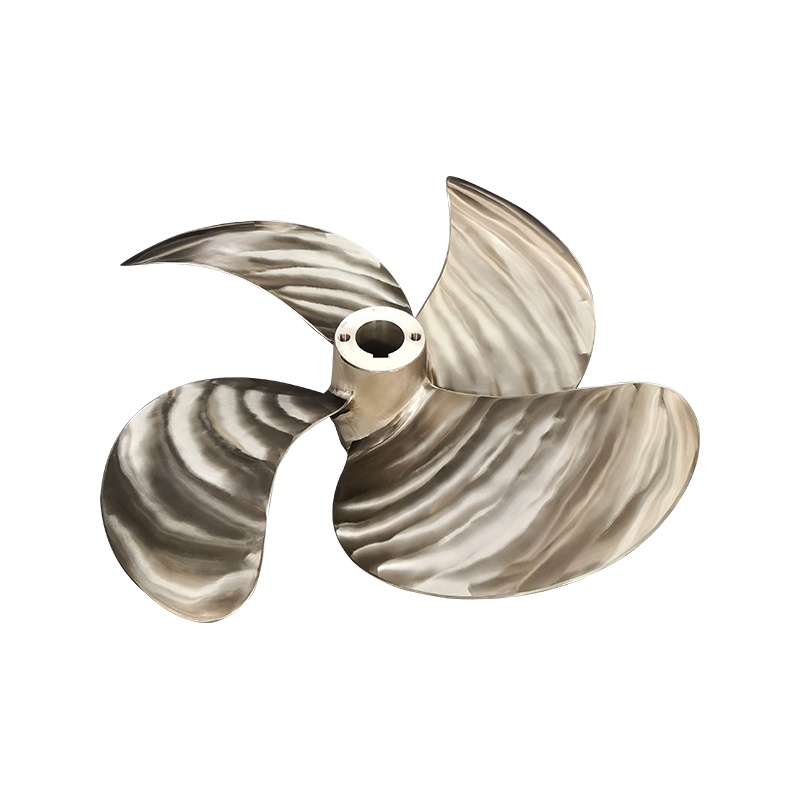
A Fixed Pitch Propeller relies on a single-cast construction. Foundries typically pour these massive components from Ni-Al bronze or stainless steel alloys, ensuring the blades remain permanently fixed to the central hub. Engineers optimize the pitch angle for one specific RPM and power output, known as the design point. To alter thrust, the bridge must change the rotational speed of the shaft directly. This creates a rigid operational profile where the propeller achieves maximum efficiency at only one specific RPM with one exact amount of power. Any deviation from this design point results in immediate aerodynamic and hydrodynamic performance penalties, increasing fuel consumption and inducing vibration.
Reversing a vessel equipped with an FPP requires a specific, time-consuming sequence. Astern movement demands bringing the massive propeller shaft to a complete stop. The crew must then reverse the rotation of the main engine itself using starting air. This introduces operational delays and significant thermal stress on engine components. During tight maneuvering, this constant stopping and starting of the main engine depletes starting air reservoirs rapidly, limiting the number of engine movements a vessel can execute in a short period.
The manufacturing process for these propellers involves precise CNC machining of the blade surfaces to match the theoretical hydrodynamic models. The solid hub design allows for a smaller hub-to-diameter ratio, which minimizes drag and maximizes the active thrust-producing area of the blades. This structural simplicity translates to immense physical strength, allowing FPPs to withstand severe ice impacts and debris strikes better than complex mechanical hubs.
A controllable pitch propeller utilizes a highly complex hub mechanism. The internal cavity contains hydraulic cylinders, piston rods, and mechanical linkages designed to pivot individual blades on their carrier ports. The system operates at a constant engine RPM while continuously varying the blade pitch angle to control thrust magnitude and direction. This allows instantaneous changes in thrust without altering engine speed, providing exceptional responsiveness during critical maneuvers.
The pitch range spans from full ahead (positive pitch) to zero-pitch (neutral thrust) and full astern (negative pitch). In the zero-pitch state, the shaft spins at its rated RPM, but the blades slice through the water without generating forward or aft movement. The reversing mechanism achieves astern thrust simply by rotating the blades past the neutral axis. This completely eliminates the need to stop, reverse, or restart the main engine, preserving starting air and reducing thermal cycling on the cylinder liners and heads.
Hydraulic power units located inside the vessel supply high-pressure oil through an Oil Distribution Box (OD box) mounted on the shaft line. This oil travels through a hollow bore in the propeller shaft to actuate the servo piston inside the hub. The precision required to machine these internal hub components is extreme, as they must withstand massive centrifugal forces and bending moments while maintaining absolute watertight integrity against seawater ingress.
When analyzing fixed pitch propeller efficiency, the data shows superior performance at the specific design point. The smaller hub-to-diameter ratio and optimized blade-root geometry reduce parasitic drag. CPP efficiency drops slightly (typically 2% to 4%) at maximum design load due to the larger, drag-inducing hub required to house the hydraulic mechanisms. However, CPP efficiency remains significantly higher during off-design conditions, such as partial loads, heavy weather, or towing operations, where the pitch can be adjusted to match the exact resistance curve of the hull.
Engine load optimization differs drastically between the two systems. A CPP allows the main engine to run continuously at its optimal Specific Fuel Oil Consumption (SFOC) rate and constant RPM. The automation system adjusts the pitch to absorb the exact power the engine produces most efficiently. Conversely, an FPP forces the engine off its optimal operating curve during slow steaming. Running a large two-stroke engine at low RPMs leads to incomplete combustion, carbon soot buildup in the exhaust gas economizer, and increased cylinder wear.
Constant RPM operation of a CPP system permits the seamless utilization of Power Take-Off (PTO) shaft generators. The main engine drives the generator at a constant frequency, supplying cheap electrical power to the ship's grid. This setup eliminates the need to run auxiliary diesel generators during sea passages. Implementing a PTO on a variable-RPM FPP system requires expensive and complex frequency converters to stabilize the electrical output, making it highly inefficient and prone to electronic failure.
A detailed FPP and CPP comparison reveals stark contrasts in vessel handling. CPPs provide vastly superior crash stop distances. The bridge can fully reverse the blade pitch in seconds without engine restart delays, generating maximum astern thrust immediately. This capability protects the vessel from imminent collisions and is a mandatory requirement for vessels operating in congested waterways or offshore installations.
CPPs excel in micro-adjustments for docking and are essential for integration with Dynamic Positioning (DP) systems. The DP computer can command minute changes in pitch to hold the vessel exactly on station against wind, waves, and current. FPPs struggle with sustained low-speed maneuvering due to minimum engine idle RPM limits. To maintain a speed lower than the idle RPM thrust, the crew must repeatedly clutch the engine in and out, causing severe wear on the clutch plates and gearbox.
The zero-thrust idle state offers a massive tactical advantage. A CPP-equipped vessel can remain completely stationary in the water with the main engine and propeller shaft spinning at full operational readiness. When the pilot orders ahead or astern movement, the thrust response is instantaneous. This eliminates the lag time associated with starting an engine and accelerating a heavy shaft line from a dead stop.
FPP reliability stems from its simplicity. Minimal moving parts result in a near-zero mechanical failure rate at the hub. Drydock inspections are straightforward, involving basic cleaning, polishing to a specific surface roughness, and minor cavitation or edge repair using approved welding procedures. The shaft seal inspection and clearance measurements complete the standard maintenance scope, keeping drydocking schedules short and predictable.
CPP vulnerabilities center on their high dependency on hydraulic systems, high-pressure rotary distributors, and internal hub seals. The dynamic O-rings and lip seals must prevent pressurized hydraulic oil from leaking into the ocean while simultaneously stopping pressurized seawater from entering the hub. Increased risk of hydraulic fluid leakage presents a severe environmental liability. Complex overhauls during scheduled drydocking require specialized technicians to dismantle the hub, replace all seals, and calibrate the feedback linkages.
Blade replacement provides a distinct advantage for CPP systems. If an FPP blade sustains severe damage from a submerged object, the shipyard must usually replace the entire propeller or execute extensive, costly in-situ welding and stress-relieving procedures. With a CPP, technicians can unbolt individual damaged blades from their carrier ports and install spares while the vessel is afloat or during a brief drydocking, without discarding the entire expensive hub assembly.
Operational Metric | Fixed Pitch Propeller (FPP) | Controllable Pitch Propeller (CPP) |
|---|---|---|
Peak Hydrodynamic Efficiency | Highest at specific design point (smaller hub) | Slightly lower at peak (larger hub drag) |
Off-Design Efficiency | Poor (engine forced off optimal curve) | Excellent (pitch adjusts to load) |
Reversing Mechanism | Stop shaft, reverse main engine rotation | Reverse blade pitch instantly (constant RPM) |
Crash Stop Performance | Slow (delayed by engine restart sequence) | Fast (immediate astern thrust generation) |
Low-Speed Control | Poor (limited by minimum engine idle RPM) | Excellent (infinite pitch adjustment to zero) |
Maintenance Complexity | Low (solid cast, no internal moving parts) | High (hydraulics, seals, mechanical linkages) |
Blade Replacement | Requires full replacement or major welding | Individual blades unbolted and replaced |
FPPs dominate deep-sea commercial vessel propeller applications. Naval architects specify them for Very Large Crude Carriers (VLCCs), bulk carriers, and ultra-large container ships. These vessels operate under a specific set of success criteria characterized by predictable, long-duration transits at constant service speeds. They execute minimal port-to-port maneuvering, relying on harbor tugs for the final berthing phases.
The operational profile of a VLCC involves loading cargo, accelerating to a service speed of 14 to 15 knots, and maintaining that exact speed and engine load for weeks across open oceans. The FPP is custom-designed for this exact draft, speed, and resistance curve. The absence of internal hub mechanics ensures the propeller will survive the 25-year lifespan of the vessel with nothing more than routine polishing. The fuel savings gained from the higher peak efficiency over thousands of nautical miles heavily outweigh any maneuvering disadvantages in port.
CPPs are mandatory for vessels with highly dynamic operational profiles. Target applications include tugboats, offshore supply vessels (OSVs), passenger ferries, icebreakers, naval vessels, and modern medium-to-large multi-role cargo ships like Ro-Ro vessels. These ships require independent port maneuvering without tug assistance to maintain tight commercial schedules.
Success criteria for these vessels involve high maneuverability, frequent forward and astern transitions, and variable bollard pull requirements. An anchor handling tug, for example, needs maximum thrust at zero speed when pulling a rig, but also requires efficient transit speeds when returning to port. The CPP allows the operator to flatten the pitch for maximum bollard pull, then coarsen the pitch for high-speed transit, all while keeping the main engines running at their maximum continuous rating (MCR). The integration of PTO shaft generators is also critical for passenger ferries, which have massive hotel electrical loads that can be powered efficiently by the main engines via the CPP's constant RPM operation.
CPP systems require complex integration with engine governors, automation systems, and bridge controls. The combinator curve—the programmed relationship between engine RPM and propeller pitch—must be perfectly tuned during sea trials. If the automation system commands too much pitch before the engine turbochargers can supply enough air, the engine will overload, causing high exhaust temperatures and potential blackout conditions.
Shipyards must ensure seamless communication between the hydraulic pitch control block and the electronic propulsion control system. Any latency or signal failure can lead to erratic pitch behavior, compromising vessel safety during critical maneuvering phases. Redundancy is critical; classification societies mandate backup non-follow-up (NFU) control levers on the bridge and local manual control valves in the engine room to bypass electronic failures.
Off-design pitch settings in CPPs can induce severe cavitation. When the pitch is reduced significantly from the design point while maintaining high RPM, the angle of attack of the blade relative to the water flow becomes extreme. This creates low-pressure zones on the blade surface, causing water to boil into vapor bubbles. When these bubbles collapse, they generate shockwaves that cause accelerated blade erosion and transmit severe vibration into the hull structure.
To mitigate these risks, engineering teams must mandate comprehensive Computational Fluid Dynamics (CFD) modeling during the design phase. Naval architects conduct Torsional Vibration Analysis (TVA) to ensure the constant RPM operation does not align with the natural resonant frequencies of the shaft line. Route-specific profile mapping ensures the combinator curve avoids known cavitation buckets, protecting the propeller and ensuring crew comfort.
Calculate the exact percentage of time the vessel will spend at its design speed versus maneuvering, slow steaming, or dynamic positioning to justify the mechanical complexity.
Engage with marine engineering consultants to conduct route-specific CFD hull-propeller matching to guarantee the selected blade geometry prevents destructive cavitation.
Perform a lifecycle maintenance risk assessment based on your fleet's drydocking capabilities and the availability of specialized hydraulic technicians in your operating regions.
Evaluate the necessity of PTO shaft generators for your specific electrical load requirements to determine if constant RPM operation is mandatory.
Mandate comprehensive Torsional Vibration Analysis (TVA) during the naval architecture phase before finalizing the propulsion specification with the shipyard.
A: A fixed pitch propeller has blades cast at a permanent angle and relies on changing engine speed to alter thrust. A controllable pitch propeller can rotate its blades on the hub to change thrust and direction while the engine runs at a constant speed.
A: Yes, but only at its specific design speed and load. Because an FPP has a smaller hub and optimized blade twist for a single RPM, it offers higher peak hydrodynamic efficiency. However, a CPP is more efficient across a wide range of variable speeds and partial engine loads.
A: Yes, but to generate astern thrust, the vessel's main engine must be brought to a complete stop and restarted in the reverse rotational direction. This delays response time compared to a CPP.
A: Large vessels like bulk carriers and tankers spend the vast majority of their operational life traveling at a constant speed on open oceans. An FPP provides the highest reliability, lowest maintenance cost, and best fuel efficiency for this steady-state profile.
A: Yes. Many larger vessels that require frequent maneuvering, such as modern cruise ships, passenger ferries, and Ro-Ro cargo ships, utilize CPPs. This improves safety in tight ports and allows them to run constant-speed PTO shaft generators.
A: CPPs contain complex internal hydraulic mechanisms, blade bearings, and seals within the hub. These components require specialized maintenance, increase the risk of hydraulic leaks, and make drydock overhauls significantly more expensive than servicing an FPP.


