


Views: 0 Author: Site Editor Publish Time: 2026-08-03 Origin: Site


Procuring marine propulsion components involves high stakes. A propulsion failure at sea leads to catastrophic downtime, severe safety risks, and massive financial losses. Balancing manufacturing cost-efficiency with uncompromising mechanical reliability is a daily reality for maritime operations. The Chinese manufacturing market offers significant cost advantages for marine propulsion components, but the landscape is highly fragmented. Buyers face the complex challenge of distinguishing genuine, high-tier foundries from trading companies, intermediaries, or low-quality producers that cut corners on metallurgy, dynamic balancing, and ISO tolerances. To navigate this market successfully, buyers need a rigorous, evidence-based framework for vetting a Marine Propeller Supplier. This involves focusing on metallurgical integrity, engineering capabilities, classification society compliance, and supply chain transparency. By applying strict evaluation criteria, you secure high-quality components that meet international maritime standards while optimizing procurement budgets.
Direct Manufacturer Verification: Bypassing trading companies requires auditing a supplier’s in-house casting, CNC machining, and non-destructive testing (NDT) infrastructure.
Material and Metallurgical Proof: Reliable suppliers must provide verifiable chemical composition reports, particularly for high-demand alloys like the Ni-Al bronze propeller (Cu3).
Mandatory Compliance: A viable supplier must have the capability to produce a classification society certified propeller (e.g., ABS, DNV, LR, CCS) with full traceability.
Total Value Over Unit Cost: Decision-makers must evaluate hydrodynamic efficiency, cavitation resistance, lead times, and warranty terms over initial unit price.
A successful procurement cycle requires on-time delivery, a zero-defect rate, verified hydrodynamic performance, and seamless system integration. When sourcing a marine propulsion system from China, identifying a true marine propeller manufacturer is the first hurdle. Trading companies often mask themselves as factories. You must verify business licenses, check the ISO 9001 scope for manufacturing rather than just sales, request foundry-specific environmental permits, and assess the actual facility footprint.
Aggressive cost-cutting often results in poor alloy mixing, inadequate cooling times during casting, skipped heat treatments, off-spec blade geometries, and weak hub bushing installations. These defects lead to slippage, severe vibration, and premature failure. You must evaluate if the supplier can support the wider marine propulsion system, providing not only fixed-pitch propellers but also controllable-pitch propellers, azimuth thrusters, and bow thruster units.
Verification Area | Direct Manufacturer | Trading Company |
|---|---|---|
ISO 9001 Scope | Explicitly states "Manufacturing and Casting" | States "Sales, Trading, or Distribution" |
Facility Footprint | Large casting pits, heavy overhead cranes, CNC centers | Small office spaces, warehouse storage only |
Technical Support | In-house naval architects and metallurgists | Relies on third-party communication, slow responses |
Environmental Permits | Holds active foundry emission and waste permits | Cannot provide local environmental casting permits |
Understanding the operational differences between a factory and a broker saves months of delays. A direct manufacturer controls the entire production schedule. They manage the raw material intake, the smelting process, the pouring, the cooling, and the final machining. When you deal with a trading company, you lose visibility into these critical steps. If a casting fails a non-destructive test, a direct manufacturer can immediately melt it down and recast. A trading company has to negotiate with their sub-supplier, leading to extended delays and potential cover-ups of minor defects to save time.
Furthermore, the integration of the propulsion system requires deep technical alignment. If your vessel uses a controllable-pitch propeller, the hub mechanism, hydraulic lines, and blade roots must be machined to exact tolerances to prevent oil leaks and ensure smooth pitch adjustments. A supplier that only casts basic fixed-pitch propellers will lack the 5-axis CNC capabilities required for complex CPP hubs. Always demand a full equipment list from the supplier to verify their machining capabilities match your system requirements.
Suppliers handling custom marine propeller orders must demonstrate proficiency in translating engine WOT (Wide Open Throttle) RPM ranges, vessel displacement, gear ratios, and hull velocity profiles into precise pitch, diameter, blade count, and skew designs. Assess whether the supplier offers proprietary propeller selector software or direct engineering support to calculate slip ratios, baseline performance parameters, and optimize blade geometry.
Advanced casting and machining infrastructure is vital. 5-axis CNC machining ensures blade surface accuracy, impacting propulsion efficiency, cavitation mitigation, and underwater noise reduction far better than traditional hand-grinding. Reliable suppliers must possess computerized pitchometers, static balancing jigs, and dynamic balancing machines to meet ISO 484/1 and ISO 484/2 standards for Class S and Class I propellers.
Data Intake and Hull Analysis: The engineering team reviews the vessel's lines plan, wake fraction, and thrust deduction factors to establish the baseline hydrodynamic environment.
Engine and Gearbox Matching: Engineers calculate the optimal shaft RPM and torque limits based on the main engine's continuous rating and the reduction gear ratio.
Blade Geometry Optimization: Using computational fluid dynamics (CFD), the team designs the blade outline, pitch distribution, and skew angle to maximize efficiency while keeping cavitation within acceptable limits.
Pattern Making and Casting Simulation: Before pouring metal, casting simulation software predicts shrinkage and porosity, allowing the foundry to optimize the gating and riser design for a flawless cast.
Precision Machining and Balancing: The raw casting is milled on a 5-axis CNC machine to achieve the exact designed geometry, followed by rigorous static and dynamic balancing to eliminate vibration.
The difference between a Class I and a Class S propeller lies entirely in the machining tolerances. Class S requires extreme precision, often mandated for naval vessels, high-speed ferries, and luxury yachts where noise and vibration must be minimized. Achieving Class S tolerances is nearly impossible with manual grinding. The supplier must utilize automated CNC milling across the entire blade surface. When auditing a supplier, ask for their latest ISO 484 tolerance inspection reports for past projects to verify their actual production capabilities.
Dynamic balancing is another critical capability. A propeller might be dimensionally accurate but still suffer from mass imbalance due to slight variations in material density within the casting. A tier-1 manufacturer will mount the finished propeller on a dynamic balancing machine, spinning it at operational speeds to detect and correct any imbalance by carefully removing material from specific non-critical areas of the blades.
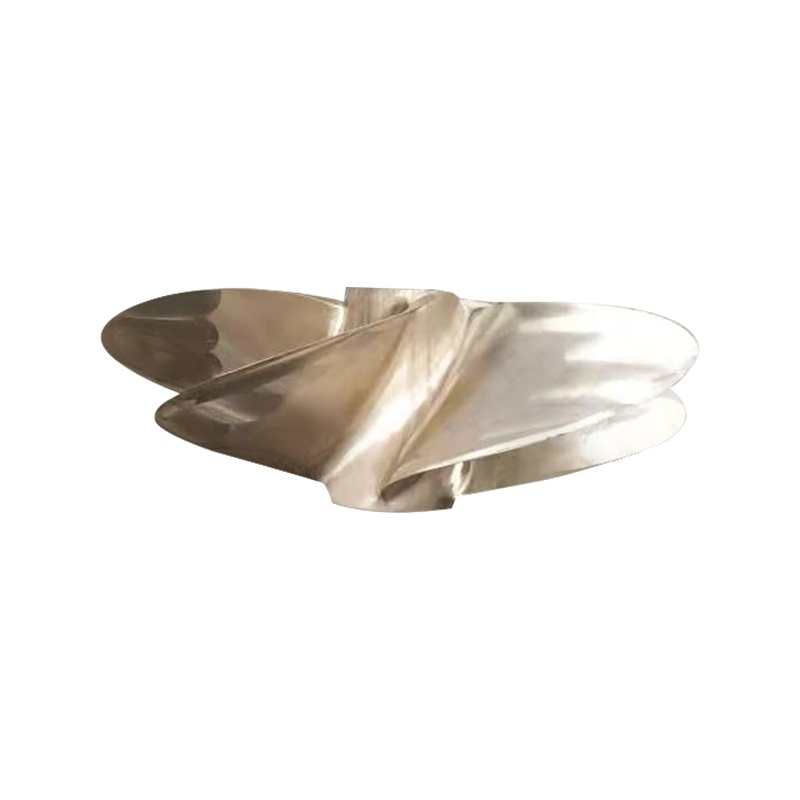
Nickel-Aluminum Bronze (Cu3 / Cu4) remains the industry standard for commercial vessels due to high tensile strength, superior cavitation, and corrosion resistance. You must verify the supplier's smelting process and scrap metal purity when evaluating a Ni-Al bronze propeller. Assess their capability to handle marine-grade stainless steel or lightweight aluminum alloys for specific applications like high-speed patrol craft or specialized commercial yachts.
In-house Non-Destructive Testing (NDT) is mandatory. Quality control gates must include dye penetrant inspection (PT) for surface cracks, ultrasonic testing (UT), and radiographic testing (RT) to detect subsurface porosity, shrinkage cavities, or micro-cracking in the blade roots.
Alloy Type | Primary Characteristics | Typical Applications |
|---|---|---|
Ni-Al Bronze (Cu3) | High tensile strength, excellent corrosion and cavitation resistance | Commercial cargo ships, tankers, tugboats, offshore vessels |
Mn-Al Bronze (Cu4) | Good strength, slightly lower cavitation resistance than Cu3 | Inland waterway vessels, smaller coastal freighters |
Stainless Steel (316L) | Extreme impact resistance, highly repairable, heavy | Icebreakers, vessels operating in debris-filled rivers |
Marine Aluminum | Lightweight, lower tensile strength, fast acceleration | High-speed patrol boats, outboard motors, small yachts |
The metallurgical integrity of a propeller dictates its operational lifespan. If a foundry uses too much recycled scrap metal without proper chemical analysis, the resulting alloy will contain impurities like iron or lead that compromise the structural integrity. A reliable foundry uses an optical emission spectrometer to analyze a sample of the molten metal before pouring. This ensures the chemical composition exactly matches the required standard for Cu3 or Cu4 bronze.
Cooling times also play a massive role in material strength. Large propellers must cool slowly in the sand mold over several days. Rushing this process by breaking the mold too early causes rapid, uneven cooling, leading to internal thermal stresses and micro-cracking. During your supplier audit, review their standard operating procedures for casting cooling times based on pour weight.
International Association of Classification Societies (IACS) certification is critical for commercial maritime insurance, vessel registration, and regulatory compliance. A facility holding a general Type Approval is different from providing individual Product Certificates stamped by an on-site class surveyor for custom marine propellers.
Buyers must cross-reference certification numbers directly with the classification societies' databases to prevent document forgery or misleading compliance statements issued without surveyor presence. A genuine classification society certified propeller ensures full traceability and structural integrity.
Request the supplier's facility approval certificates from major societies like ABS, DNV, or Lloyd's Register.
Ensure the approval specifically covers the casting weight and material type you require.
Verify that the supplier has an established protocol for calling in local surveyors for witness testing.
Check the physical stamping on the propeller hub, which must match the surveyor's final product certificate.
Confirm that the supplier retains the physical test blocks (ladle samples) for the required statutory period.
The process of obtaining a product certificate involves the surveyor witnessing several key stages. They will typically inspect the raw material certificates, witness the pouring of the metal, observe the mechanical testing of the sample blocks (tensile strength, yield strength, elongation), and review the final NDT reports. They also perform a visual and dimensional inspection of the finished propeller before stamping the hub.
Do not accept a "certificate of conformity" issued solely by the manufacturer if your vessel requires class certification. Only a certificate issued directly by the IACS member society is valid for class notation. If a supplier claims they can provide class certification but refuses to include the surveyor fees as a transparent line item in the quotation, treat this as a major red flag.
Foundry capacity, cooling periods for large castings, machining queues, and class surveyor schedules impact delivery timelines. Trying to expedite manufacturing carries significant risks. A propeller is a dynamic component; a slightly higher upfront investment for a high-tolerance CNC-machined propeller yields substantial long-term fuel savings and lower engine wear.
Evaluate standard commercial warranty expectations, claim processes for premature cavitation erosion or hub failures, and the supplier's willingness to provide comprehensive replacement or repair guarantees. A reliable supplier stands behind their metallurgical quality and hydrodynamic design.
Hydrodynamic efficiency directly impacts the daily fuel consumption of the vessel. A poorly designed propeller with incorrect pitch distribution will suffer from high slip, meaning the engine burns more fuel to achieve the desired vessel speed. Furthermore, severe cavitation caused by inaccurate blade profiles will erode the bronze surface within months, requiring expensive dry-docking and repairs. Investing in a precision-machined propeller from a reputable foundry pays for itself through reduced fuel consumption and extended maintenance intervals.
Lead times are another critical factor. A standard custom propeller typically takes 8 to 12 weeks to manufacture, depending on the size and class requirements. If a supplier promises a 4-week delivery for a large, class-certified propeller, they are likely cutting corners on cooling times or skipping essential NDT inspections. Build realistic lead times into your procurement schedule to ensure the foundry has the necessary time to execute their quality control procedures properly.
Sharing proprietary hull shapes, vessel designs, and engine-load profiles requires strict bilateral NDAs. Evaluate the supplier's historical track record with Western or international OEMs. Conduct third-party inspections or remote video audits focusing on raw material storage, scrap-to-virgin metal ratios, calibration records of testing equipment, and worker safety conditions.
Address how the supplier handles advanced designs like high-skew propeller profiles and their capability to prototype these geometries accurately. Specific packaging requirements, such as custom IPPC-certified wooden crates, bolted hub mounts, and heavy-duty rubber edge wrapping, are necessary to prevent transit damage for heavy, precision-machined components.
Intellectual Property: Sign a robust Non-Disclosure Agreement before sharing any lines plans or proprietary wake field data.
Factory Audits: Hire a local third-party inspection agency (like SGS or TÜV) to conduct a physical audit of the foundry before placing a deposit.
Milestone Payments: Structure your payment terms around verifiable milestones, such as successful casting, completion of CNC machining, and final class certification.
Logistics Planning: Specify the exact dimensions and weight limits for the shipping crates to ensure compatibility with your freight forwarder's equipment.
Transit Insurance: Always secure comprehensive marine cargo insurance, as a dropped propeller during port handling can result in a total loss of the component.
Packaging is often overlooked but is critical for heavy bronze components. A 5-ton propeller cannot simply be strapped to a standard pallet. It requires a custom-built, fumigated wooden cradle that supports the hub and prevents the blade edges from touching the floor. The hub must be bolted securely to the base of the crate to prevent shifting during heavy seas. Inspect the supplier's proposed packaging design before authorizing shipment.
Remote video audits have become a standard practice. Ask the supplier to walk through their facility with a live camera. Look for the calibration stickers on their pitchometers and balancing machines. Check the organization of their scrap metal yard; different alloys should be strictly segregated to prevent cross-contamination during smelting. A clean, well-organized foundry is a strong indicator of disciplined quality control processes.
Sourcing from China is highly viable and cost-effective provided the buyer prioritizes engineering transparency, strict metallurgical verification, and IACS compliance over rock-bottom pricing. Verify manufacturer status, demand IACS certification capability, audit NDT and CNC infrastructure, and request sample material reports.
Draft a comprehensive Request for Quotation (RFQ) that includes vessel hull drawings, engine WOT RPM, required IACS class, desired alloy, and tolerance standards.
Hire a third-party inspector to verify the foundry's CNC capabilities and NDT equipment calibration before signing the contract.
Cross-reference all provided IACS certificates directly with the issuing society's online database to confirm authenticity.
Establish a milestone-based payment schedule tied to successful casting, machining, and final surveyor approval.
A: Request live video tours of the foundry, check ISO 9001 scopes for "manufacturing" rather than just "sales," and look for heavy CNC machinery, casting pits, and in-house testing labs.
A: Custom casting, cooling, machining, and class surveyor inspections typically take 8 to 12 weeks, depending on the diameter, weight, and the specific classification society's scheduling.
A: The costs include third-party surveyor fees, mandatory destructive and non-destructive testing of ladle samples, and strict physical traceability requirements throughout the entire manufacturing process.
A: Ni-Al Bronze (Cu3) offers higher tensile strength and superior cavitation resistance compared to Manganese-Aluminum Bronze (Cu4), making Cu3 the preferred choice for harsh commercial marine environments.
A: Yes, capable manufacturers produce controllable pitch propellers (CPP), azimuth thrusters, and bow thrusters, though this requires advanced 5-axis CNC machining and higher-tier engineering validation.
A: Standard export packaging includes custom IPPC-certified fumigated wooden cradles, steel-bolted hubs, and heavy-duty edge wrapping to prevent blade deformation during sea freight.


